
Deck Staining in Mays Landing & Atlantic County, NJ
South Jersey decks get punished. Humidity, salt air, UV, and standing rain break down stain faster here than almost anywhere else in the state. If your deck is gray, splintering, or peeling, it's telling you the old finish has failed. Restaining now — before the wood rots — is cheaper than replacing boards later.
We pressure wash, sand down rough grain, repair loose boards and popped nails, then apply premium penetrating stain and a UV-resistant sealer. Most decks in the Mays Landing area run $800 to $2,500 and finish in 2–3 days depending on size and condition.
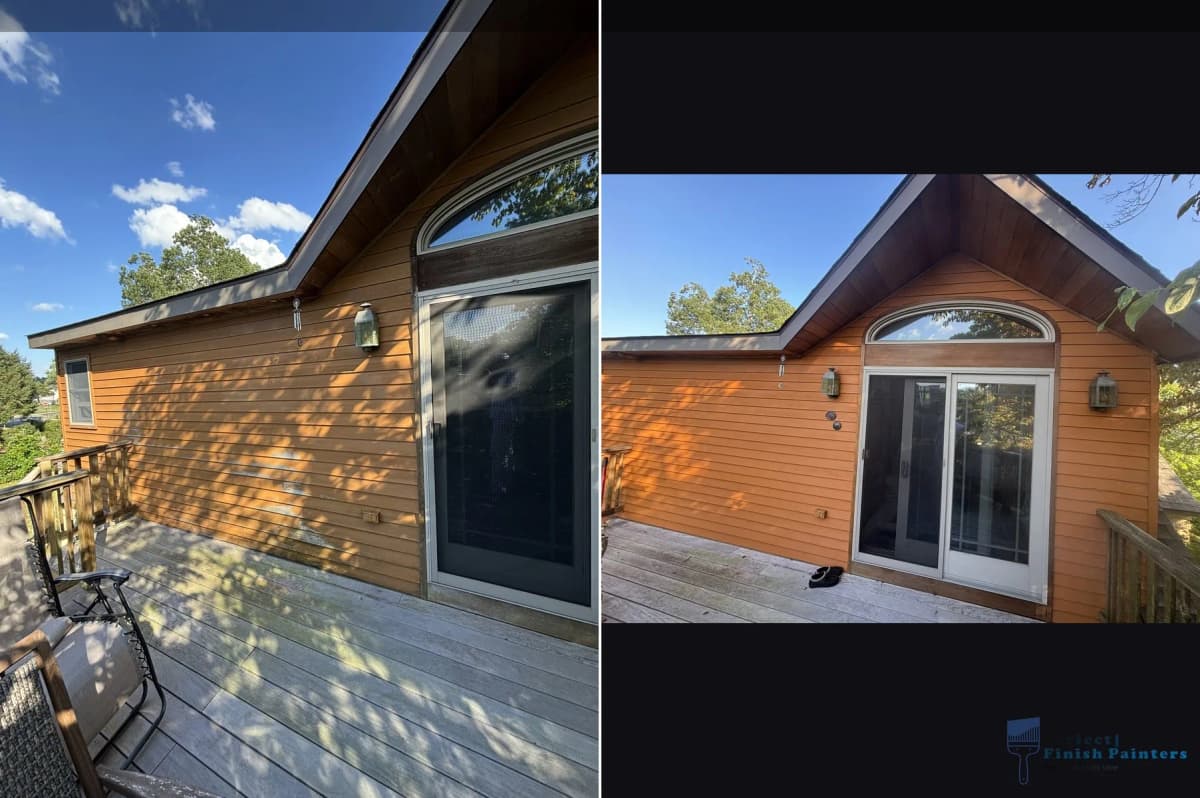
What's Included in Deck Staining?
How Do You Stain a Deck? Our Process
Inspection & Prep Plan
We walk the deck with you, check for rot, loose boards, and failing finish, and agree on a stain color and opacity (semi-transparent, semi-solid, or solid). We'll tell you honestly if a board or two needs replacing before we start.
Pressure Wash & Strip
We pressure wash off dirt, mildew, and loose finish. If the old stain is peeling, we chemically strip it — staining over failing finish is the #1 reason deck jobs fail early, so we don't cut corners here.
Sand & Repair
We sand down raised grain, splinters, and any glossy spots the stripper missed. Popped nails get replaced with deck screws. Rotted boards get swapped out.
Stain & Seal
We apply premium penetrating stain in 1–2 coats using brushes and pads for full absorption. Horizontal surfaces get an extra UV-resistant sealer to protect against foot traffic and standing water.
Cleanup & Walkthrough
Plants and grass get rinsed, railings get wiped down, and we do a final walkthrough with you. We'll tell you exactly how long to stay off the deck before using it again.
Where Do We Offer Deck Staining in Atlantic County?
We stain decks throughout the Atlantic County area — from shore homes that take the brunt of salt air to inland decks shaded by pines. Shore and bayside decks in Brigantine, Margate, and Somers Point need stain every 2–3 years because salt eats horizontal finishes fast. Inland decks in Mays Landing, Hammonton, and Galloway can stretch to 3–4 years between coats.
Pair deck staining with our exterior house painting or shed restoration to knock out your whole outdoor refresh in one shot and save on trip costs.
Ready to Bring Your Deck Back?
Free on-site estimate. Honest assessment. No pressure.
Frequently Asked Questions
Most deck staining projects in Atlantic County cost between $400 and $2,500 depending on square footage, condition, and whether old finish needs stripping. A typical 300 sq ft deck runs $800–$1,500. Free on-site estimates — call 609-377-4226.
In South Jersey's humidity and salt air, semi-transparent stains typically last 2–3 years on horizontal surfaces and 4–5 years on railings and risers. Solid stains last longer, 4–7 years, but look more like paint. We use premium penetrating stains built for shore climate to maximize longevity.
Stain is almost always the better choice for decks. Paint sits on the surface and peels — especially on horizontal walking boards that take foot traffic and standing water. Stain soaks in, shows the wood grain, and wears down instead of peeling. We only recommend painting a deck when the wood is too far gone to show grain nicely.
Late spring through early fall — ideally when temperatures are 50–90°F with low humidity and no rain in the 48-hour forecast. May, June, and September tend to be the most reliable windows in South Jersey. We avoid staining in direct midday sun, which dries the stain too fast and prevents deep penetration.
Not right away. New pressure-treated lumber needs to dry out for 3–6 months before it will accept stain — otherwise the stain sits on the surface and peels. We'll tell you honestly when your deck is ready. In the meantime, a clear water-repellent sealer protects the wood until it's dry enough to stain.
Yes, if the old finish is peeling or flaking, we chemically strip and sand it off before applying new stain. Staining over failing finish is the #1 reason deck jobs fail within a year. It's more work up front, but it's the only way to get a result that lasts.